By Maya Finds Editorial
Red, rose, wine and champagne: this Karva Chauth moodboard explores how colour, borders and jewellery change the feeling of a saree. Start with a shade you enjoy wearing, then choose one detail to lead. A richly worked border can provide all the drama; a softer drape can leave room for more expressive earrings.
These five frames offer styling ideas for readers planning their own celebration. Follow the customs that matter to you; the images do not prescribe a ritual, dress code or a personal observance by Maya.
1. Red and gold: give the border room

The first frame pairs a deep red drape with small gold-toned motifs and a broad decorative edge. The border creates a clear line from shoulder to hem, so the styling already has a focal point. Borrow that balance with a saree you own: arrange the pallu so its edge remains visible, then keep your bag and footwear quieter.
Before adding another necklace, look at the blouse neckline and the work nearest your face. Earrings may provide enough framing. Choose jewellery for the actual weight and texture of your outfit, rather than trying to reproduce every detail in the artwork.
2. Let the pallu shape the silhouette

The second red look draws attention to the fall of the pallu and the fabric gathered at the waist. Use it as a reminder to check your drape from the side as well as the front. A neat shoulder arrangement can show the blouse and border while keeping the overall shape easy to read.
Try walking, sitting and reaching forward in your intended shoes. Adjust the hem if it catches underfoot. Secure the drape only where your fabric can take a pin without damage, and keep loose ends clear of lamps.
3. Rose and gold for a softer contrast
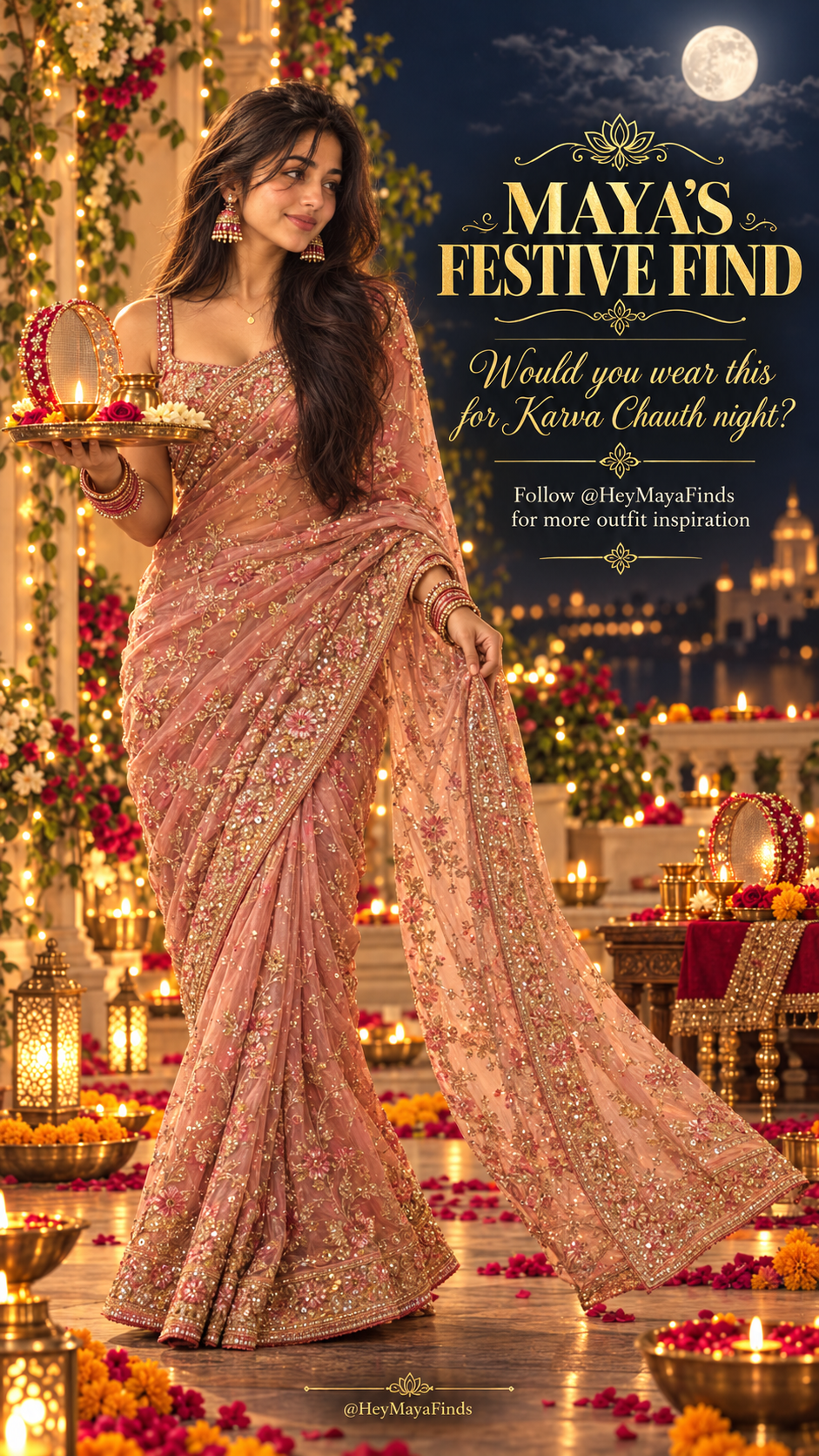
The rose-pink frame offers a different starting point from red. Its lighter base gives the gold-toned decoration a softer contrast, while the long pallu keeps the outfit expressive. You can borrow the colour pairing without copying the exact garment: compare pinks beside your own jewellery in daylight before deciding.
For makeup, a rose or berry lip is one possible connection to the outfit. Test it with the full look rather than treating a matching lip as a requirement. If your neckline is detailed, let it guide the amount of jewellery around your face.
4. Wine tones and a seated fit check

The seated wine-coloured look makes the waist, wrists and gathered drape especially noticeable. Use that view as a practical cue: an outfit should feel manageable when you sit, not only when you stand for a photograph. Check that the waistband and blouse allow comfortable movement and that bangles do not snag the pallu.
Keep hair clear of any earring fastenings that catch. Loose waves, a low bun or a familiar style can all work; choose the one that lets you stop adjusting your outfit.
5. Champagne: build interest through texture

The final frame keeps the saree and decoration close in colour. The interest comes from the contrast between the flowing drape and its worked surface. If you prefer a pale palette, look at the actual fabric under indoor and outdoor light: close tones can read differently as the lighting changes.
Keep supporting accessories deliberate. A small bag and familiar footwear can finish a detailed outfit without introducing another competing feature.
Bring the mood into your own wardrobe
Choose your colour first, settle the drape, then add jewellery and makeup. The illustrated garments are styling concepts; they do not establish a fabric composition, exact construction or fit for a retailer item.
See the complete Karva Chauth collection, or use our ethnic-wear fit guide for practical garment-measurement checks when comparing straight kurtas and Anarkalis.