By Maya Finds Editorial
A warm Dussehra palette can begin with one piece: an orange skirt, a deep-red dupatta or an ivory outfit edged in gold. Let that piece set the direction, then decide how much detail you want around it. Colour, drape and jewellery do not all need to compete for attention.
This edit follows five existing styling frames, moving from bright orange to deeper reds and a lighter ivory-and-gold contrast. They offer ideas to adapt to your own wardrobe and celebration. These are editorial colour choices, not a required festival colour sequence; follow the customs that matter to you.
1. Orange and gold: make one colour the anchor
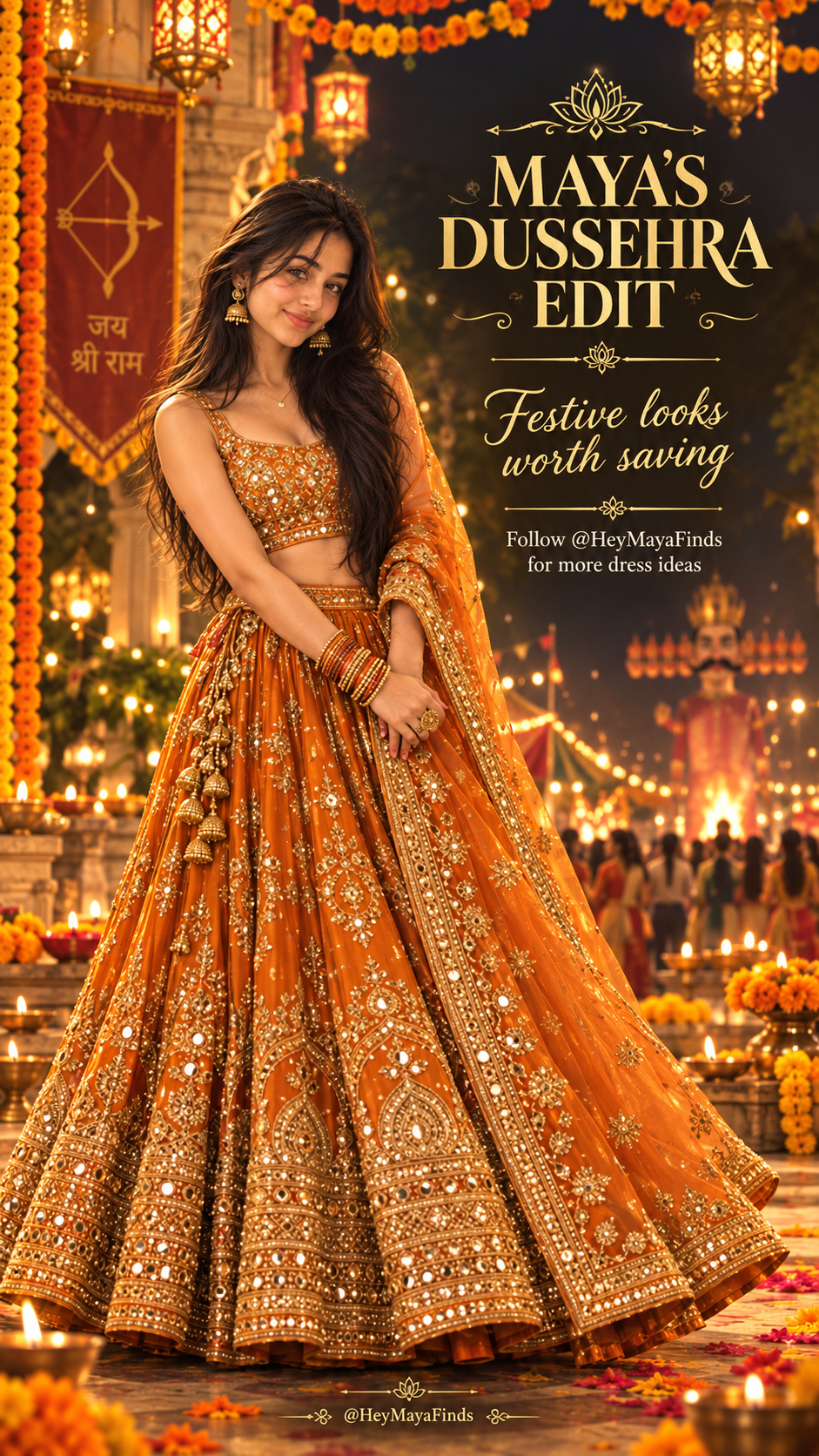
The orange look brings its energy through a clear base colour and a richly decorated hem. If you like this direction, start with the orange piece you already own and build around it. A plain kurta with a worked dupatta can suggest the same palette without requiring a full lehenga.
Repeat one metallic tone in your earrings or bangles, then pause before adding more. When a skirt has a broad decorative border, a quieter bag and footwear give the lower half room to be seen. Check the colour in daylight and indoor lighting before choosing the final accessories.
2. Deep red: let the border frame the outfit
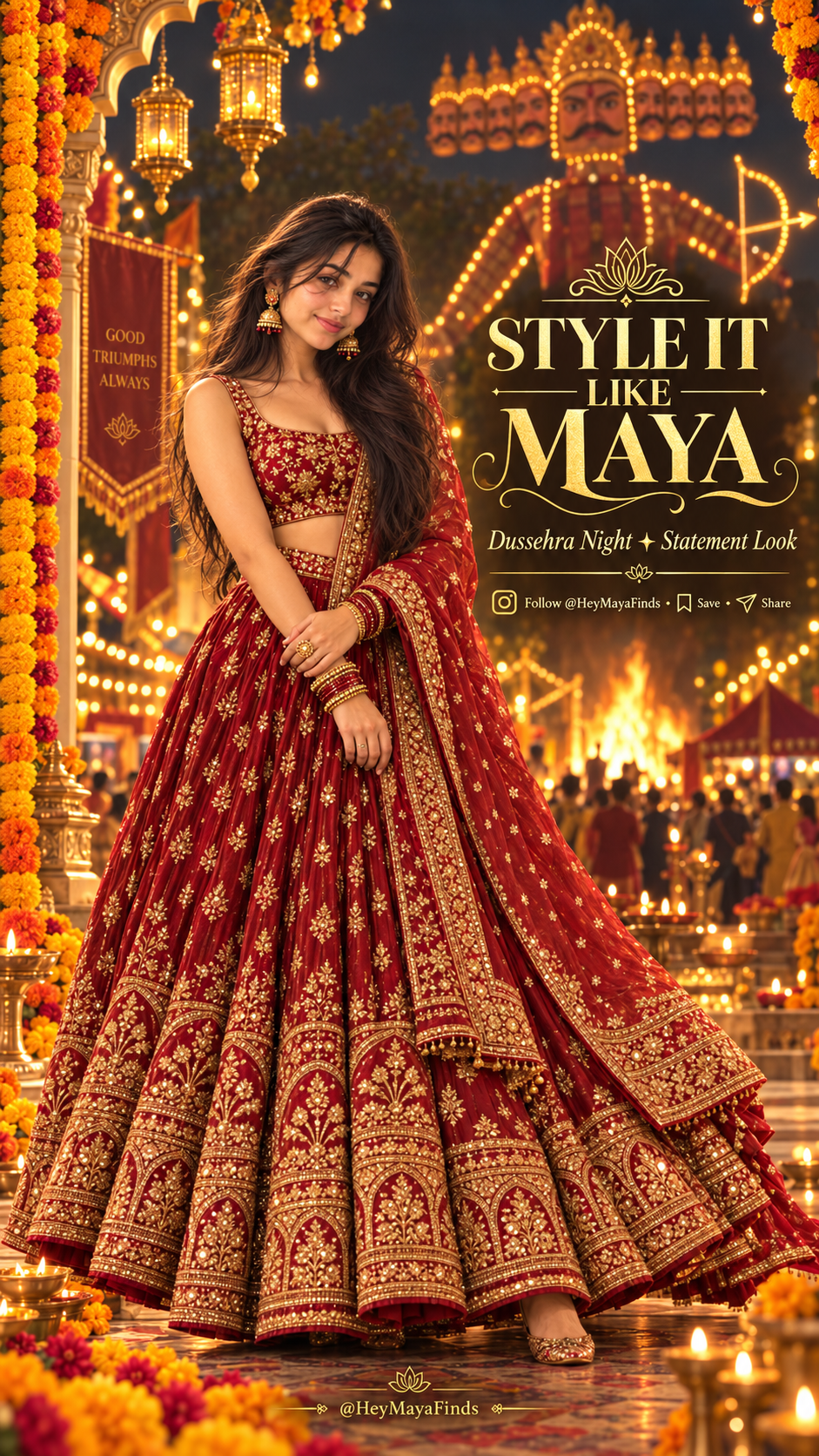
The second frame changes the balance through a deeper red base. Small motifs lead into a more elaborate hem, while the dupatta repeats the same colour family. Borrow that continuity when combining separates: echo one shade or one border detail rather than trying to match every element exactly.
Look at the blouse neckline before choosing a necklace. If the neckline already carries detail, earrings may be enough to frame the face. A simple hair arrangement can keep both the neckline and the drape visible.
3. Orange with a red dupatta: choose one contrast
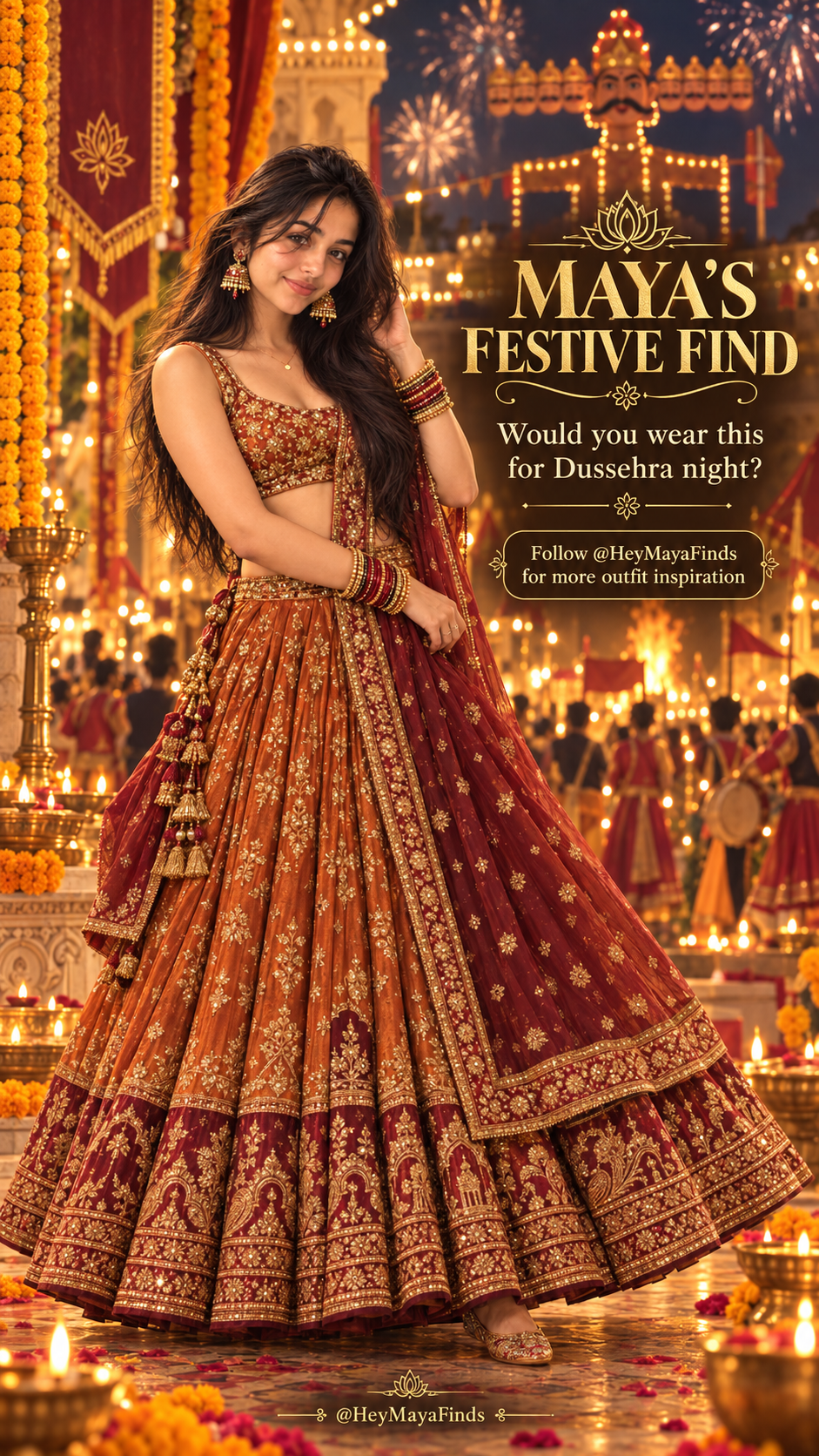
Here, orange and red share the outfit. The contrast is useful when you want a familiar festive piece to feel different: try a deeper dupatta over a warmer base, then compare the colours together before adding jewellery. The combination can also work through a smaller accent, such as a bag.
Give the dupatta a clear place to fall. Try your intended arrangement while walking and sitting, and check that it does not pull at the shoulder. Secure it only where the actual fabric can support a pin without damage.
4. Ivory and gold: change the contrast, keep the detail
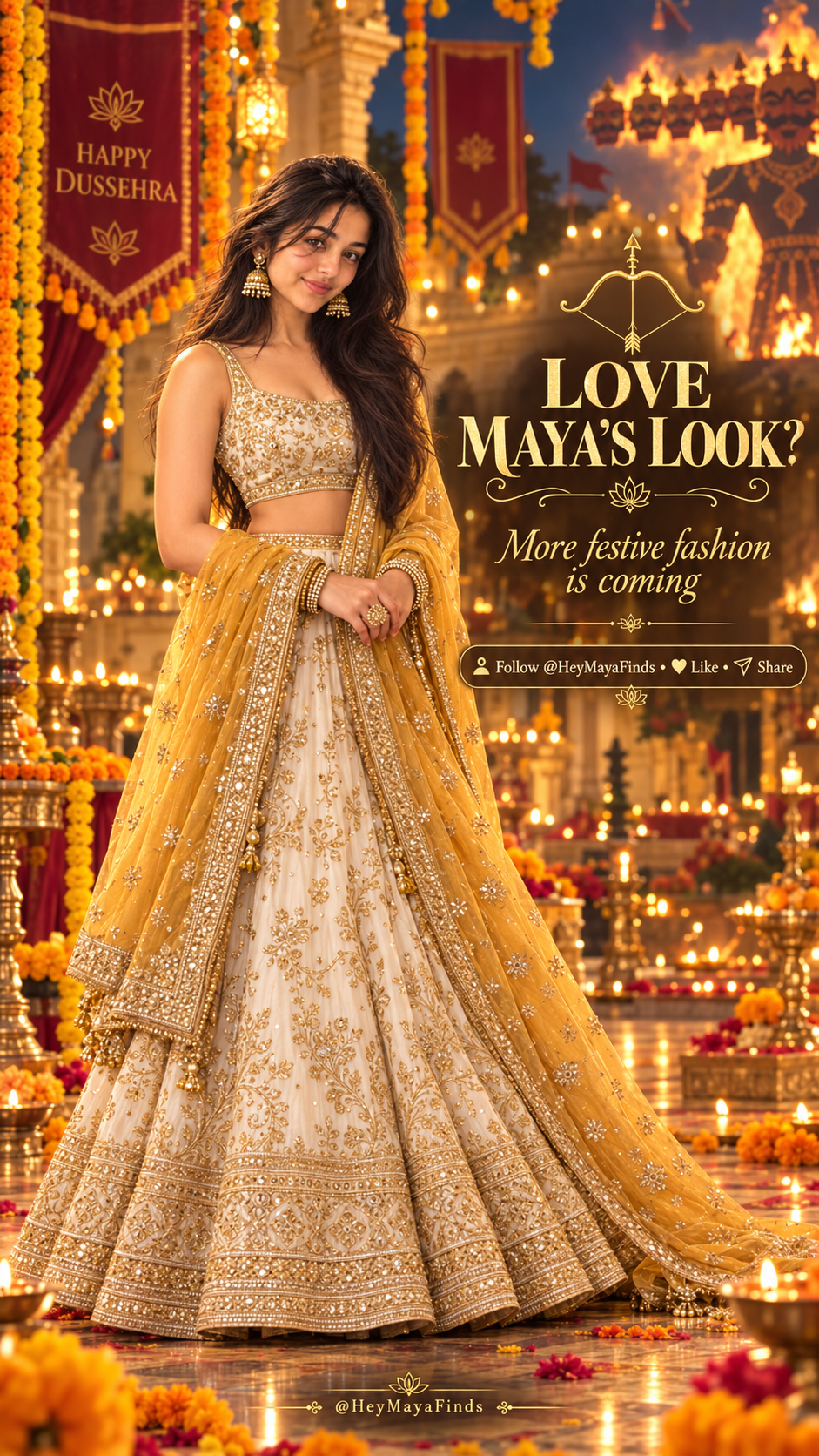
The ivory look offers a lighter base beside the yellow-gold drape. Its effect comes from texture and close colour relationships rather than a strong red-orange contrast. To adapt the idea, compare the undertones of your pale garment, dupatta and jewellery together; they need not be identical to feel coordinated.
Let the outfit guide your makeup rather than assuming pale clothing needs a stronger lip. A soft rose or warm berry shade is a possible finishing touch. Choose the version that feels comfortable with the complete look.
5. Red and gold: finish for movement
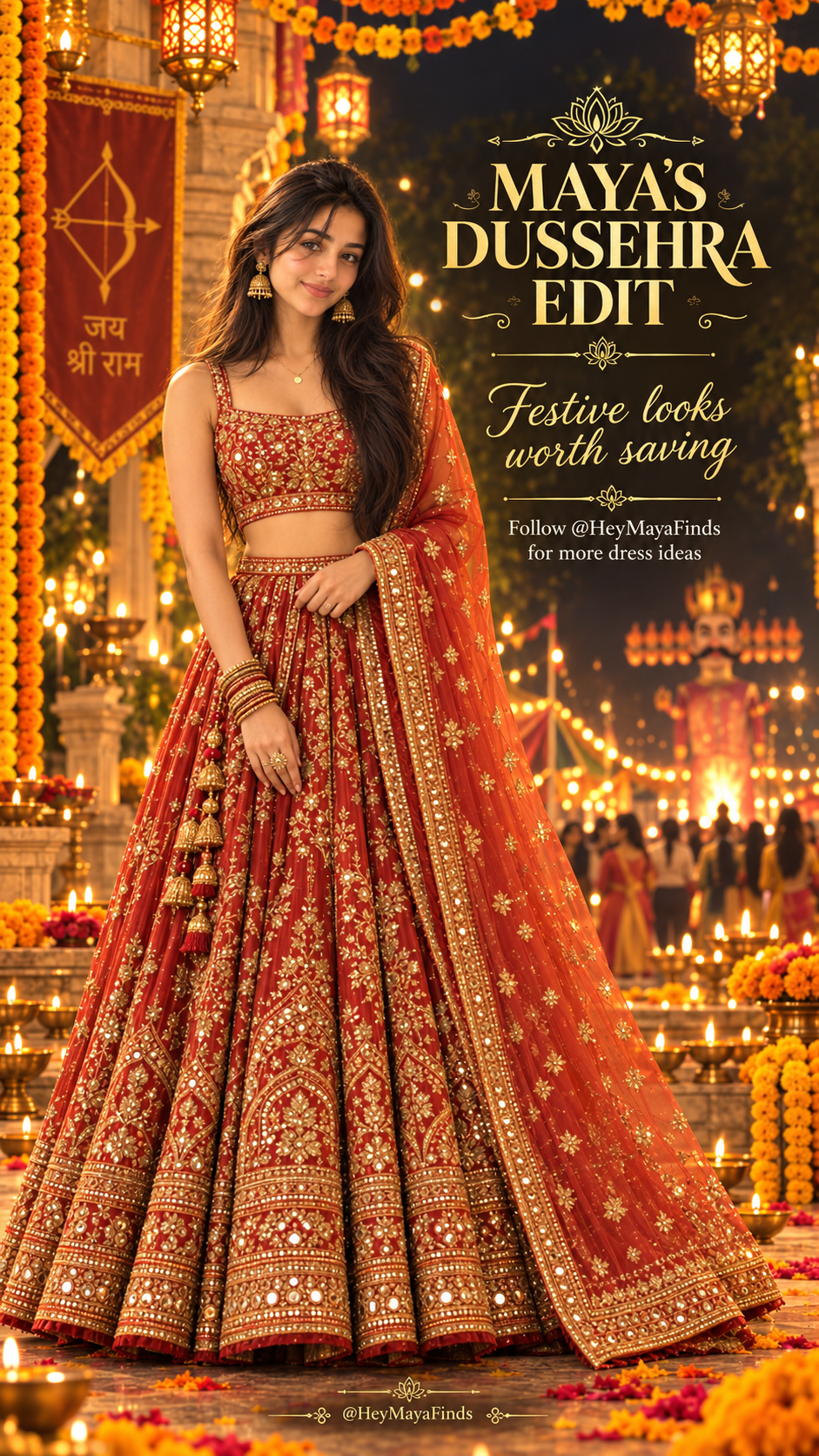
The final red frame brings the full silhouette into view. Use it as a reminder to try the outfit beyond a front-facing pose. Walk, sit and reach forward in the shoes you plan to wear. Check that the hem clears the floor, the waistband feels manageable and the blouse allows movement.
Notice whether jewellery catches the fabric or the dupatta needs constant attention. Keep loose ends clear of lamps and heat sources. Small adjustments to the pieces you already have can matter more than adding another accessory.
Make the colour story your own
Choose an anchor colour, settle the silhouette, then add the finishing details. The pictured garments are styling concepts; the artwork cannot establish the fabric, construction or fit of a retailer item.
Browse the Dussehra collection for the full visual edit. If you are comparing kurta sets or Anarkalis, our ethnic-wear fit guide explains the garment measurements to check before ordering.